 01
01
Mauthausen Village · May 8, 2026
An Ordinary
Town
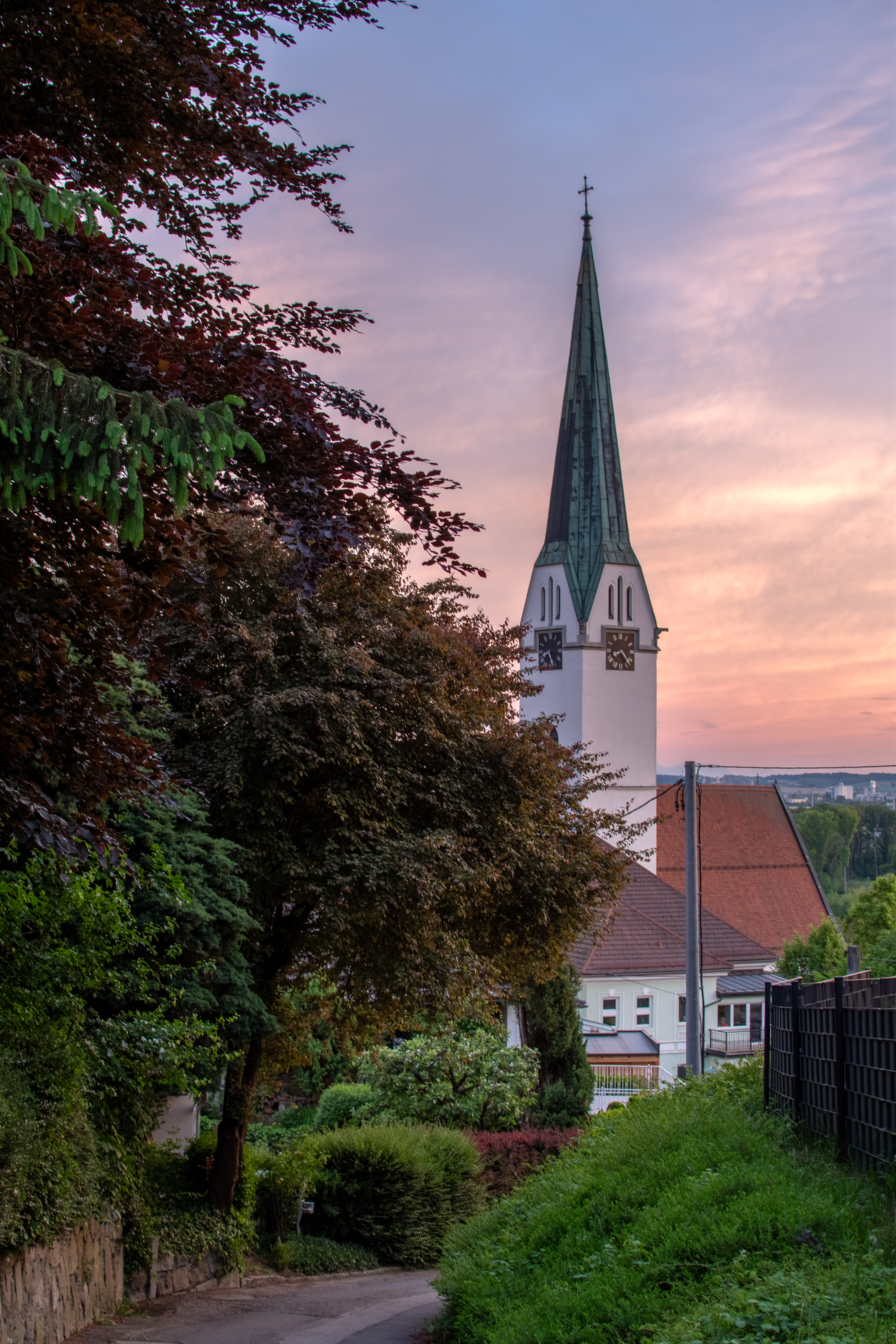
The parish church of St. Nicholas in Mauthausen at golden hour, the evening before the Gusen liberation ceremony. This is a small working town on the Danube near Linz, Austria — mostly farms, the river, and a church. The concentration camp sits in the hills above it. The people here knew. This “ordinariness” is the first fact to reckon with.
 02
02
The Danube at Mauthausen · May 8, 2026
The River
at Sunset
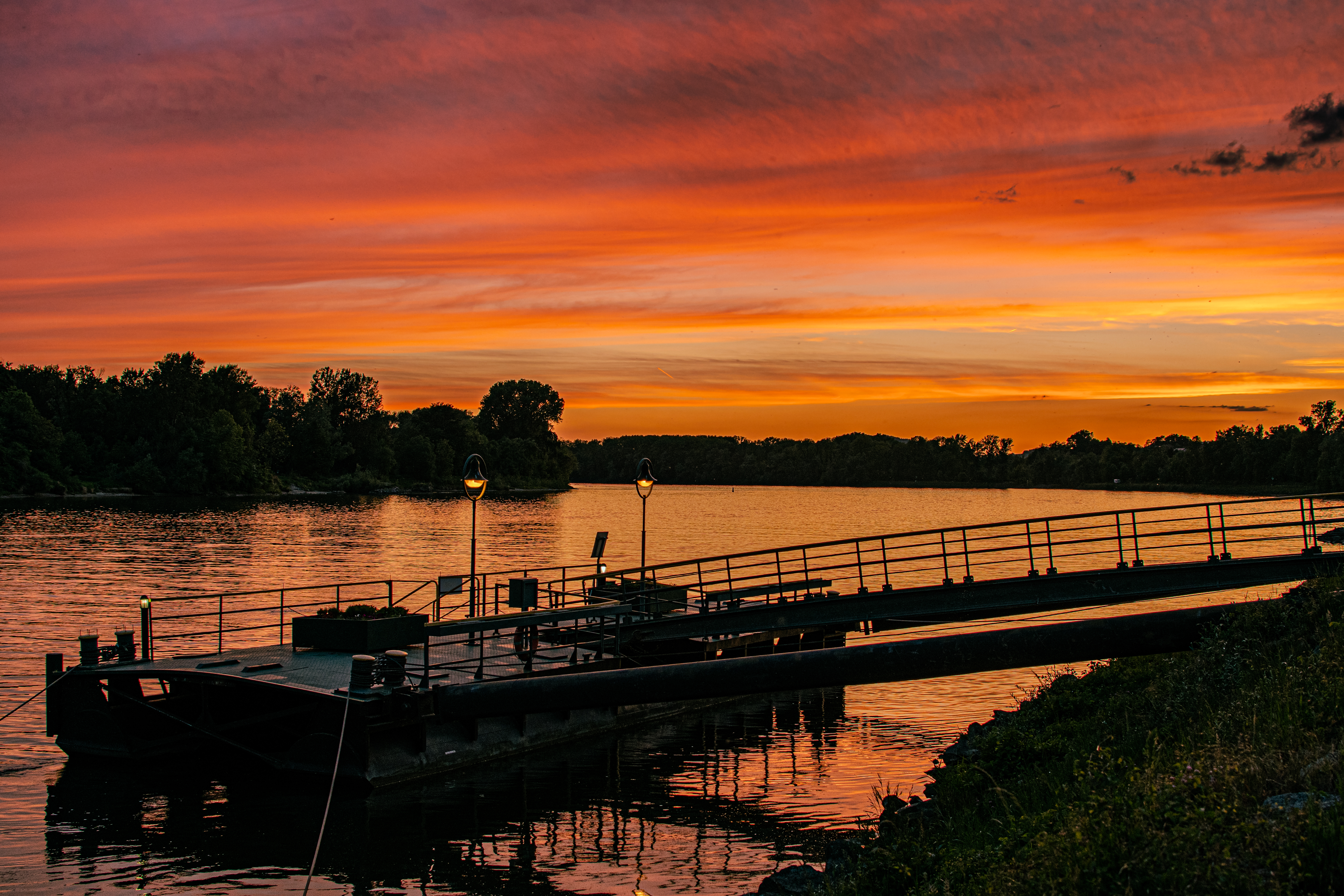
Sunset over the Danube at Mauthausen, the evening before the Gusen ceremony. The river is beautiful here. It has always been beautiful here. Prisoners arrived by barge and train to this same waterfront and were marched uphill through the town to the camp. The ashes of those who died at Gusen were dumped into this river. There are no grave markers at Gusen. The Danube was the grave.
 03
03
The Fields Above Town · May 8, 2026
Where They
Stood
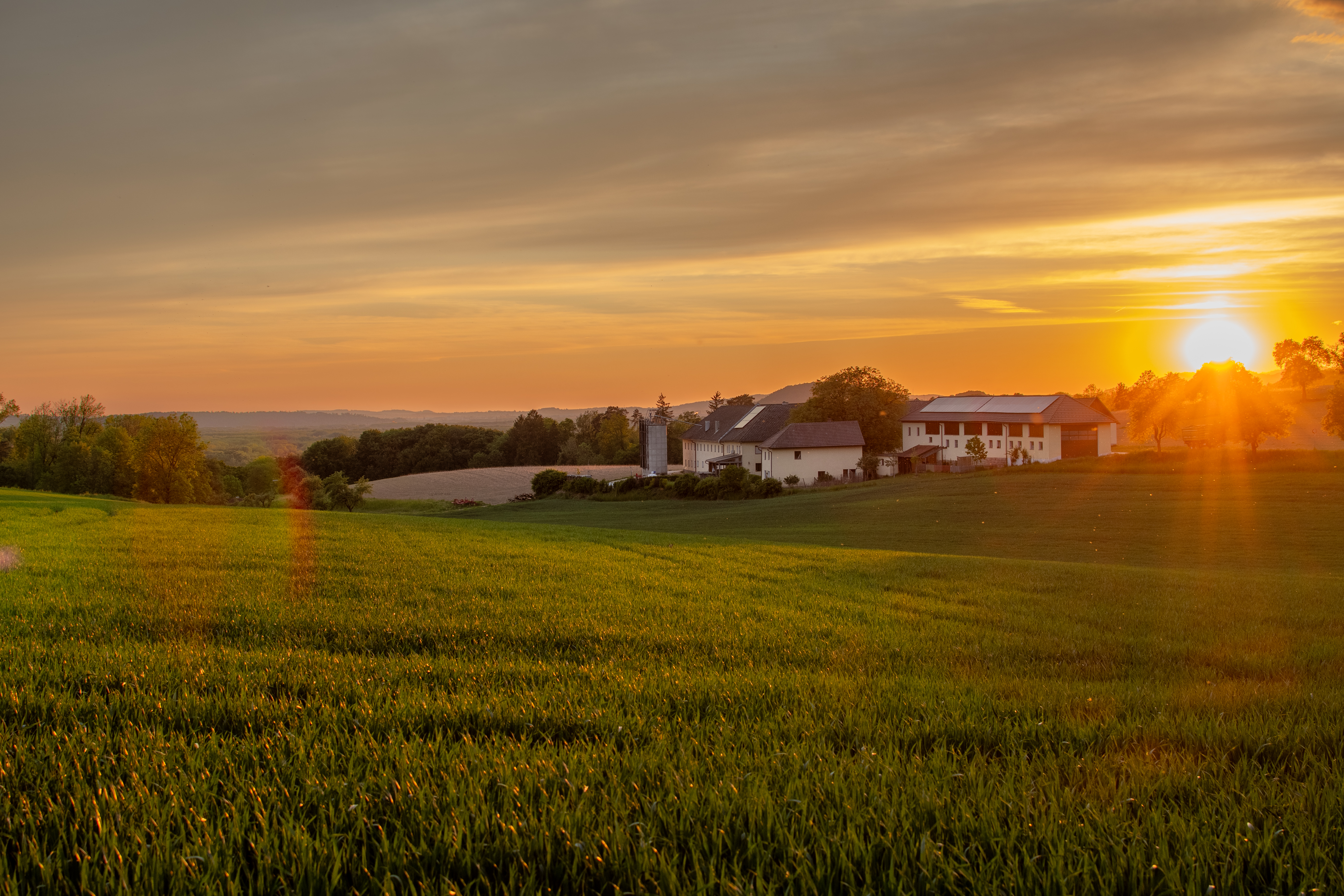
Golden hour over the rolling hills above Mauthausen village. These are the same fields where I believe my grandfather and fellow soldiers stood for a photograph on V-E Day, May 8, 1945. The land looks almost the same. The trees have grown. The rolling field is still there. A large cemetery lies just behind where I stood to make this image. The war is very close here against the beauty, stillness and quiet.
 04
04
81 Years Apart · May 8, 2026
Their Photo,
V-E Day 1945
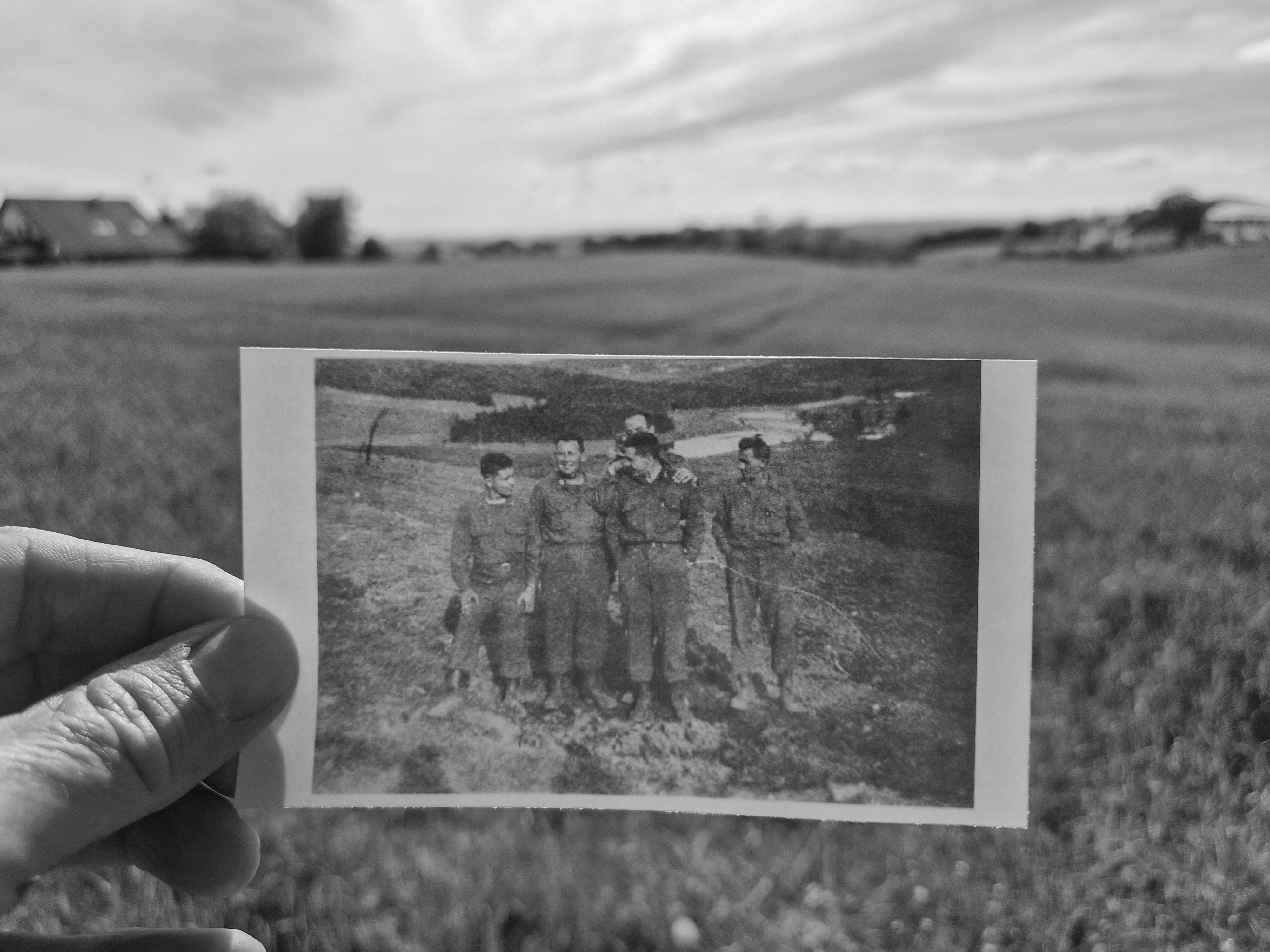
My grandfather’s V-E Day photograph held up in front of what I believe is the same location, eight decades later. He is second from the left and would have been 28 years old. The trees have grown, but the same rolling fields are there. He was a battle-hardened medical officer who survived the Battle of the Bulge. Yet he would never speak of what he actually saw at Gusen and Mauthausen.
 05
05
Mauthausen · May 9, 2026
The Gate
Still Stands
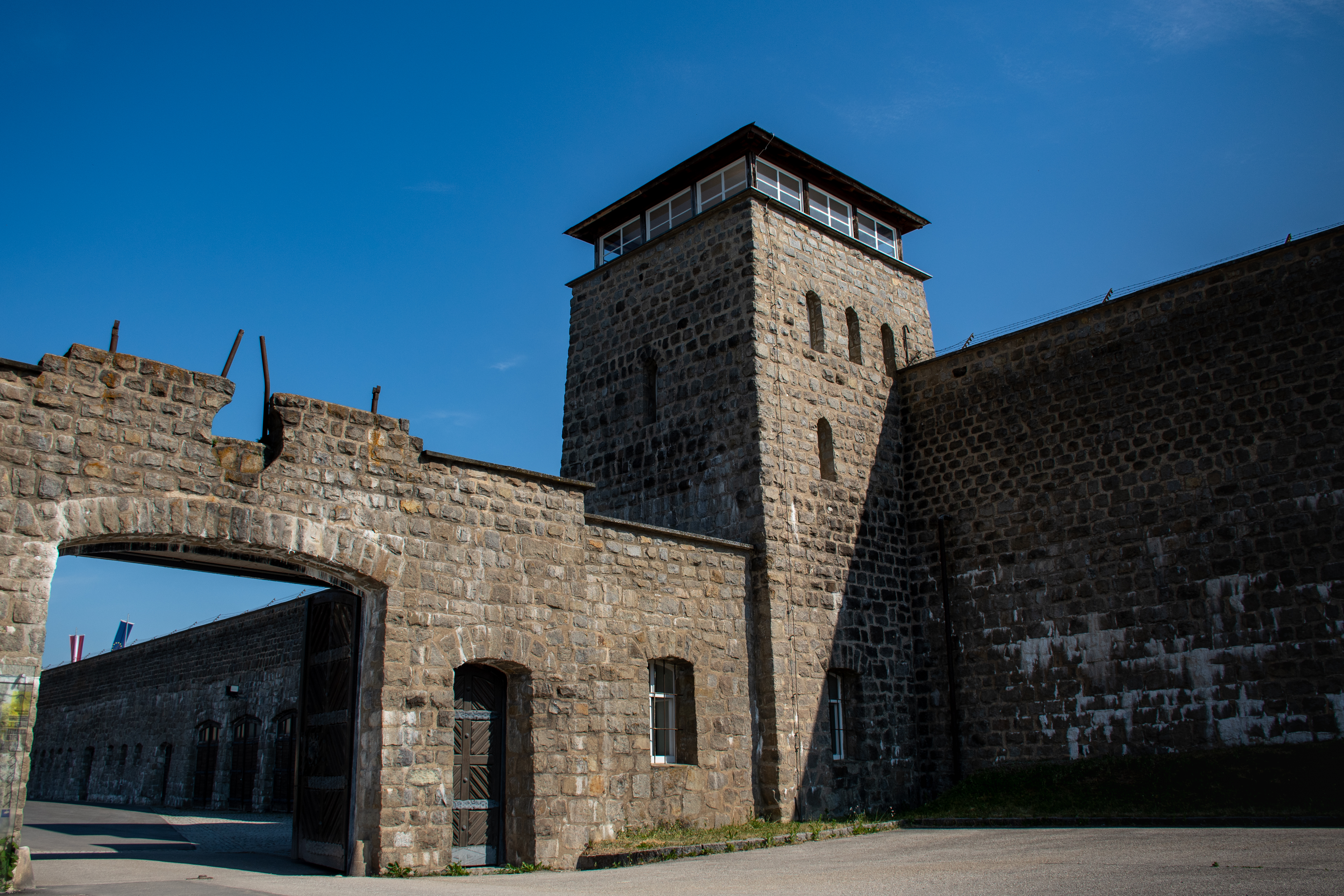
The main entrance and guard tower of Mauthausen in the morning light. Look at the top of the gate: the rebar protruding from the stonework is all that remains of the Reichsadler — the Nazi imperial eagle that once presided over every prisoner who passed beneath it. On the day of liberation, survivors tore it down with their hands. Photographs from that moment, held in the National Archives and the U.S. Holocaust Memorial Museum photo archives, show them doing it eagerly. The stone was quarried by those same prisoners. The camp was designed to be permanent. The eagle is gone. The stone walls and towers remain.
 06
06
Mauthausen · May 9, 2026
The Soccer
Pitch
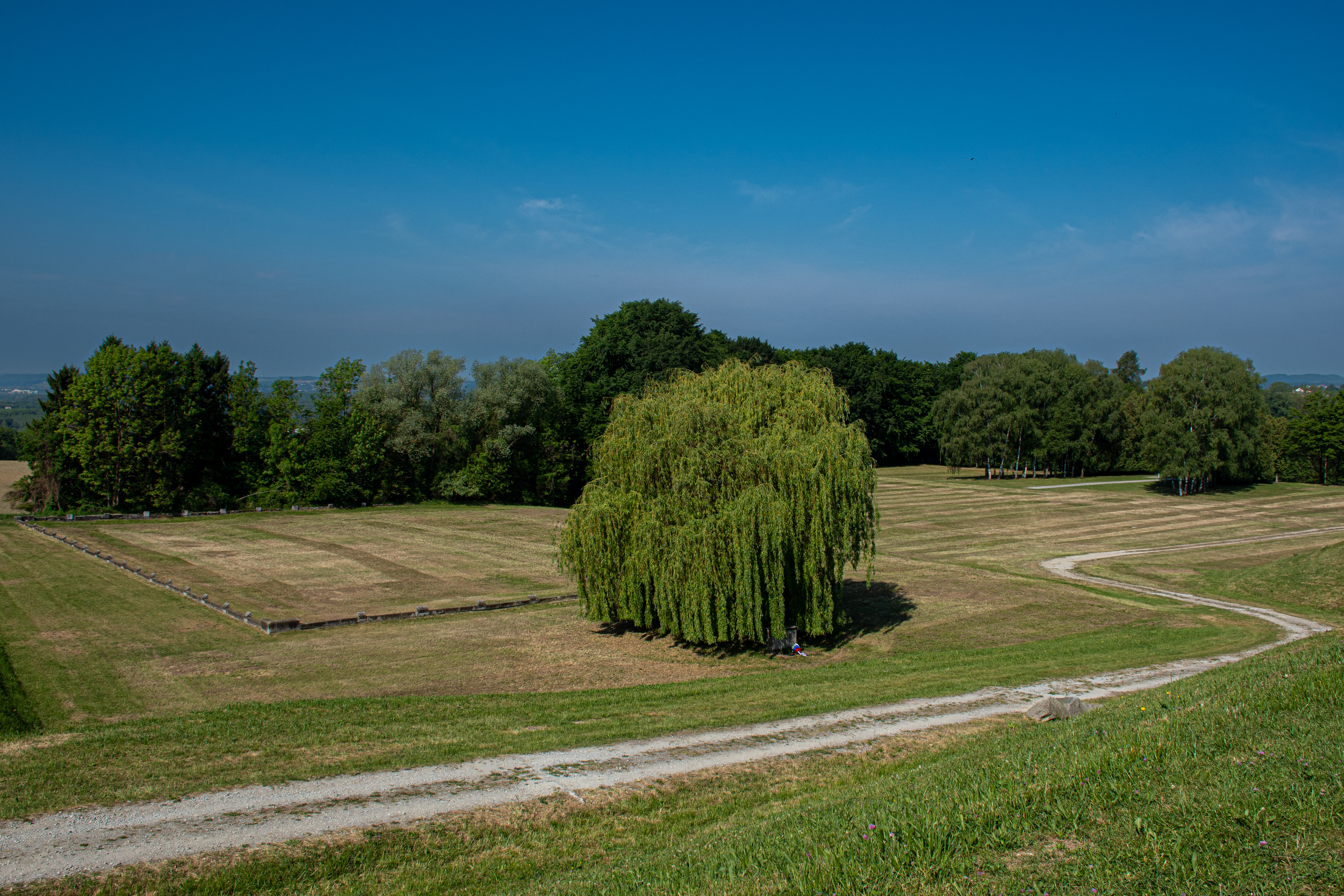
Just outside the main gate. The SS had a soccer team. Local Austrian clubs played against them in a regional league, and in the 1944/45 season, SS Mauthausen were autumn champions of the Landesklasse Oberdonau, the highest league in Upper Austria. The terraced hillside to the left served as bleachers for the spectators, including children. To the right of the willow were wooden overflow barracks for prisoners, separated from the playing area by barbed wire. Anyone on the field and anyone in the stands could see them. Everyone knew. Yet the games continued.
When the liberation forces arrived, they found the crematorium still holding unburned remains and bodies piled beyond identification. For those they could not identify, this soccer pitch became a mass grave. American forces required the remaining SS guards and local villagers to dig the graves. The same ground where Austrian civilians had watched a league match now held the evidence of what their silence had made possible. The bodies have since been moved as part of ongoing efforts to identify the dead.
 07
07
Above the Quarry · May 9, 2026
The White House
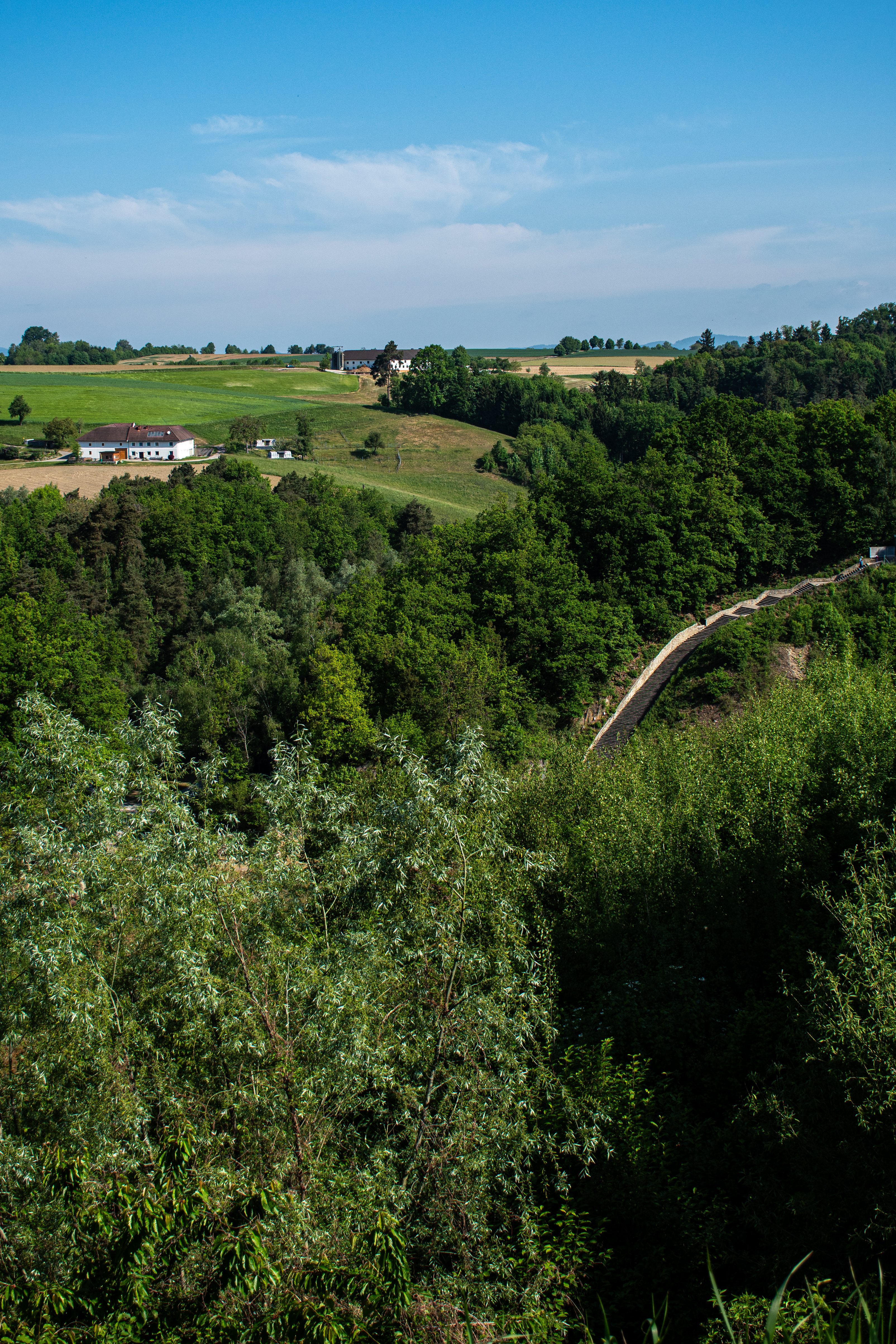
The view from the edge of the Wienergraben quarry toward the surrounding farms, the Stairs of Death visible along the right edge. The white farmhouse on the hill in the background is the Gusenbauer property. From this hillside, Eleonore Gusenbauer watched prisoners being shot in the quarry below and left to die, sometimes for days. In 1941, she filed a formal complaint with the local police. In her complaint she protested the atrocities not on any moral grounds but that because she was an old lady and they were disturbing her nerves. She asked that either the killings in the quarry stopped or that they be moved where she didn't have to see them.
In the road below (now obscured by the trees), local schoolchildren were escorted by the quarry gates to and from school. They were told to see nothing and hear nothing.
 08
08
The Quarry · May 9, 2026
The Stairs
of Death
One hundred and eighty-six steps — rough, narrow, and uneven. I don't have large feet yet many steps were more narrow than my shoes. This was one of the primary execution methods at Mauthausen. Prisoners were forced to carry granite blocks weighing up to 50 kilograms up these stairs, often at a run and under constant blows from guards. Those who faltered could trigger a domino collapse of bodies and stone all the way down. For the ones specifically targeted for execution on a given day, they would be made to this time and again until they expired.
For others (those who were no longer useful in the quarry; those who the SS wanted to quickly get rid of; or childen that the SS had no use for), they would be lined up at the cliff edge above at the Fallschirmspringerwand, or “Parachutists’ Wall” as the SS called it — and given a choice: be shot, or push the prisoner in front of you over. Many chose to jump themselves. Former prisoner Edward Mosberg stated: “If you stopped for a moment, the SS either shot you or pushed you off the cliff to your death.” The SS guards would throw children over the wall themselves.
In winter, guards would strip prisoners and spray them with water, leaving them to freeze. Mauthausen was not classified as a death camp in the formal sense. It was something the Nazis called a Knochenmühle (Bone Grinder). In other camps, prisoners dreaded a transfer here. Its name incited terror across the entire system.
 09
09
The Quarry · Approximately 1942
The Stairs
in Use
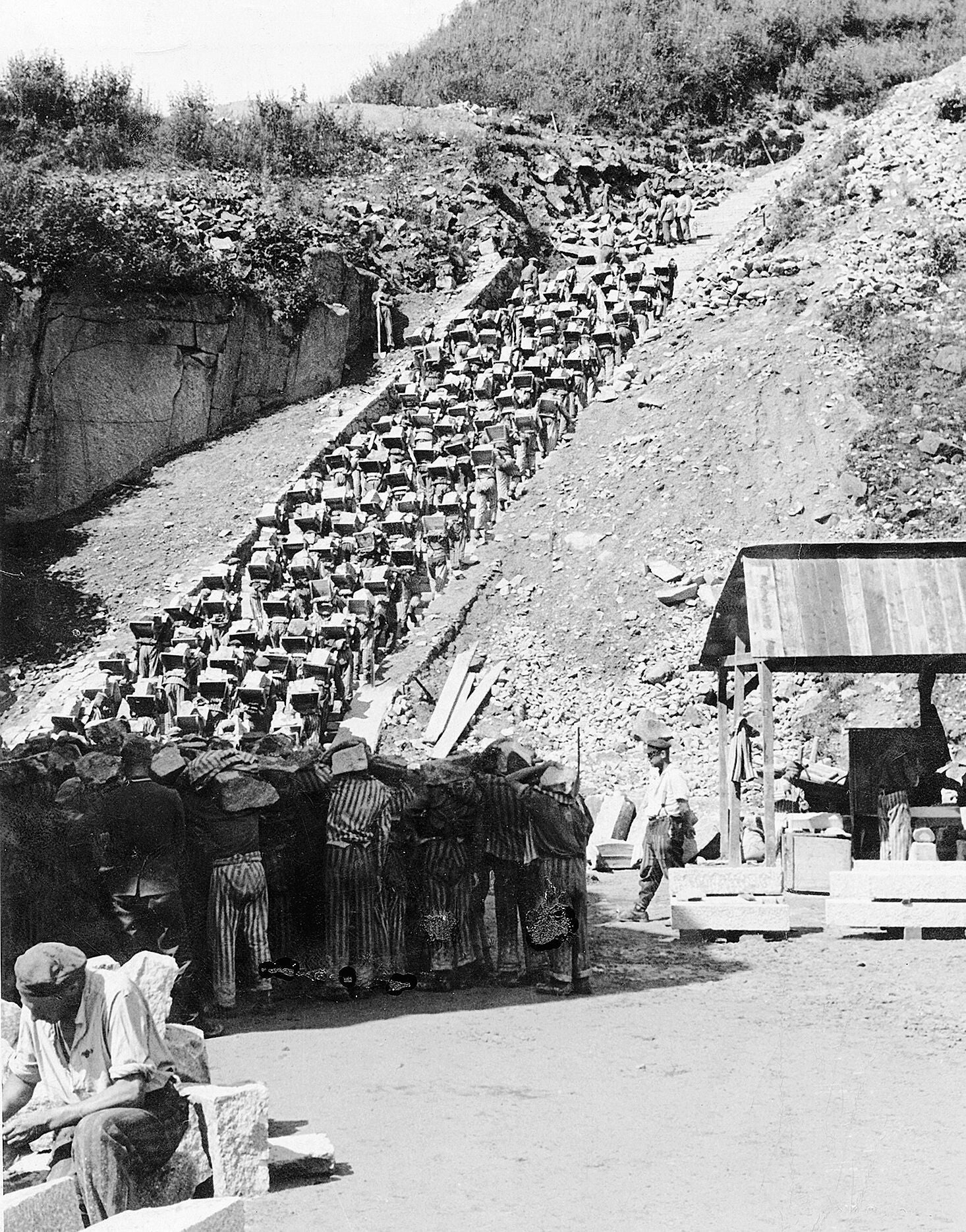
Prisoners carrying granite blocks up the Stairs of Death, photographed from nearly the same angle as the image in the previous panel. The blocks weighed up to 50 kilograms. The column stretches from the quarry floor to the top without a break. A guard stands at right. The guards who watched this scene, and the neighbors whose houses overlooked it, watched it every working day for seven years.
Bundesarchiv, Bild 192-269 / photographer unknown / CC-BY-SA 3.0
 10
10
The Quarry · May 9, 2026
The Quarry
Floor
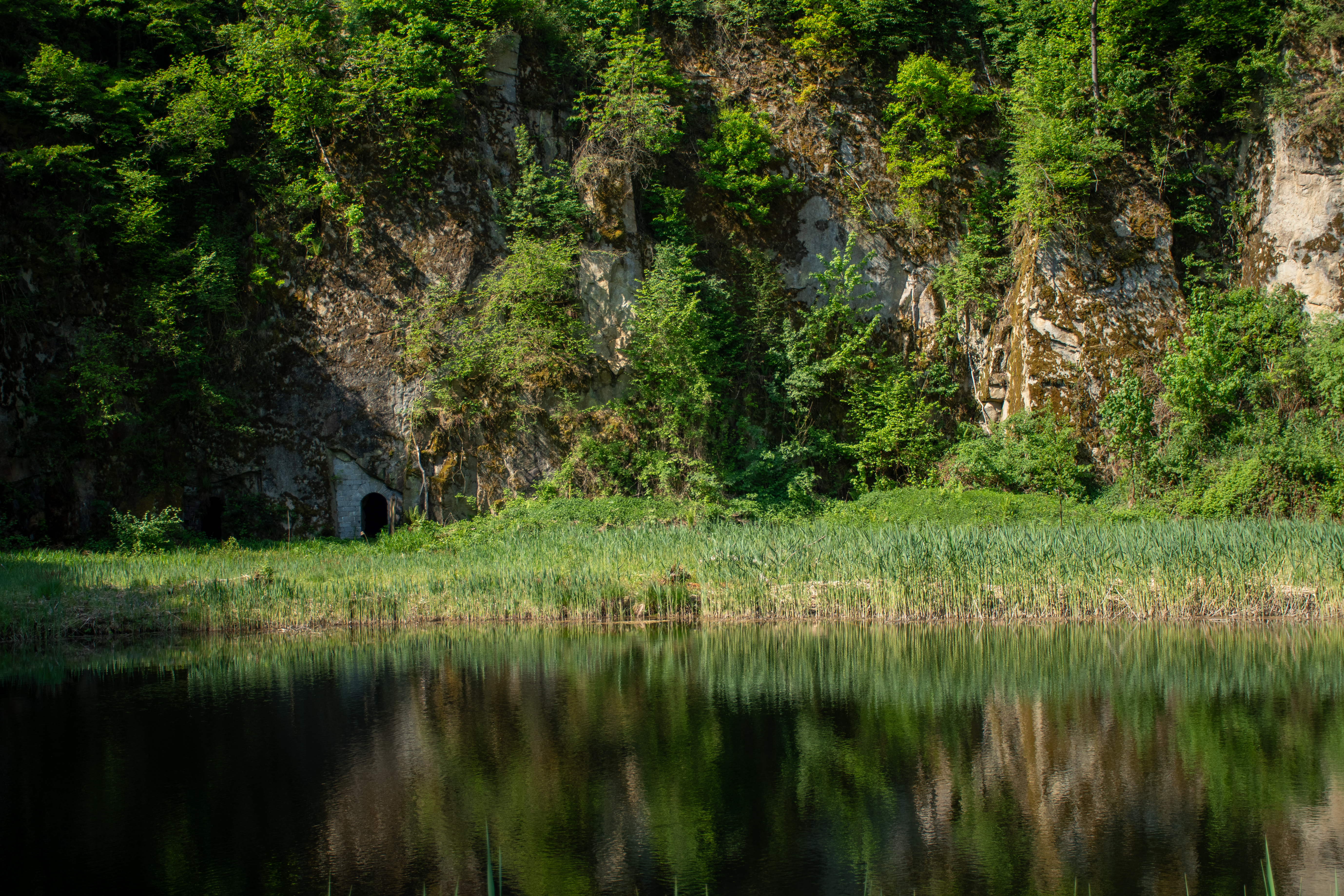
The floor of the granite quarry today is peaceful. Flowers bloom. A still green pond reflects the greenery on the cliff walls. Trees have grown along the edges. The beauty is disorienting. It takes effort to wrap your head around both things at once: what this place looks like now and what it was designed to do. Over 90,000 people died in the Mauthausen-Gusen complex over seven years. After the war, neighbors used this quarry as a picnic and bathing ground.
 11
11
Gusen Memorial · May 9, 2026
Gusen’s
Entrance
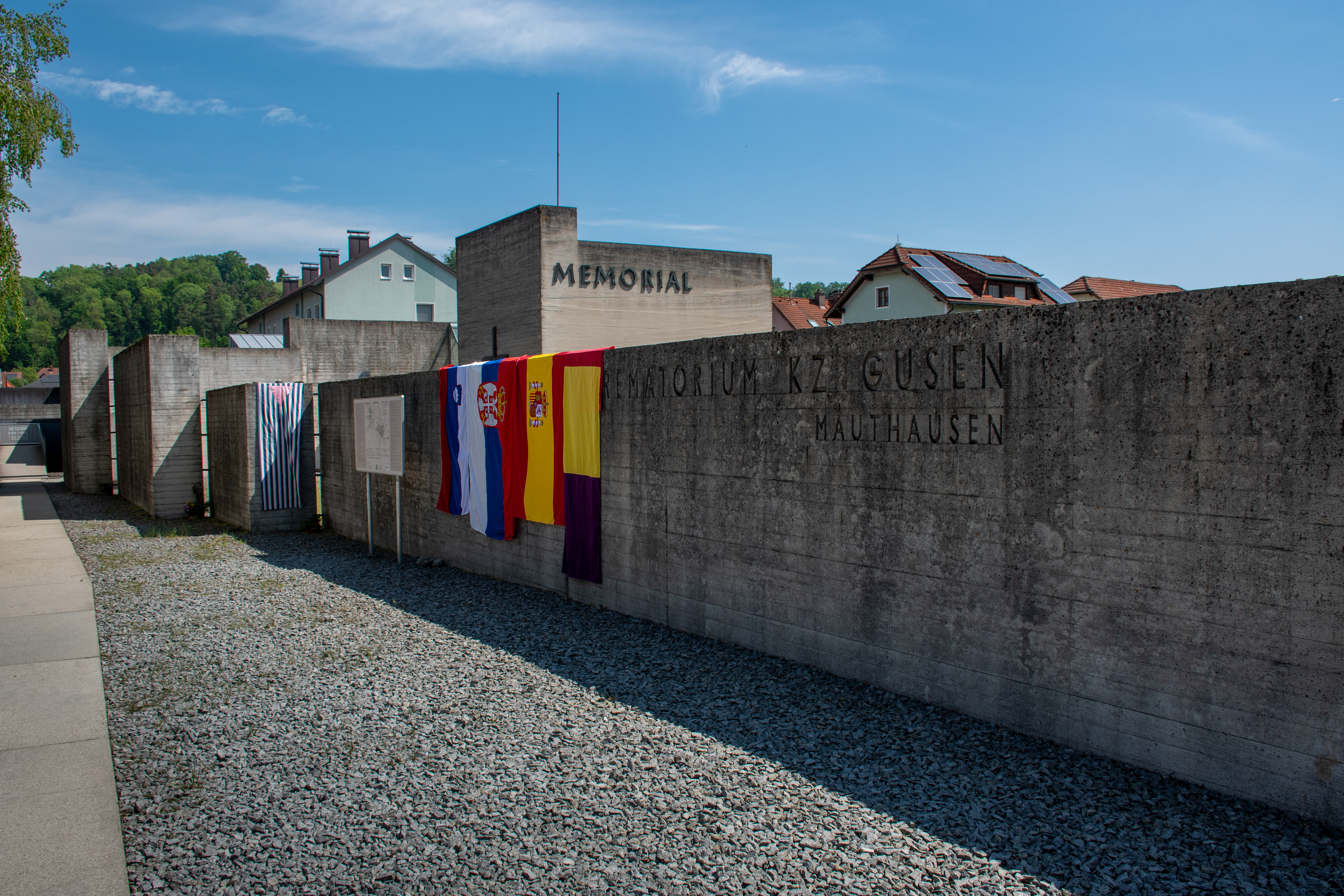
The memorial wall leading into the former Gusen branch camp and crematorium. Despite being larger, holding more prisoners, and having a higher death rate, Gusen has been historically overshadowed by Mauthausen. For decades after the war, barracks were converted to aparatments and houses were built over the site. An estate home sits now sits atop what was once one of the most lethal subcamps in the Nazi system. The main entrance gate was converted to a private residence. Two barracks became private homes. The SS barracks served as apartments until the early 2000s. Only the crematorium was preserved, and even that was nearly lost. The local quarry, sold back to its original owners by Austria after the war at a steep discount, continues to operate today.
 12
12
Inside the Gusen Memorial · May 9, 2026
What the
Liberators Found
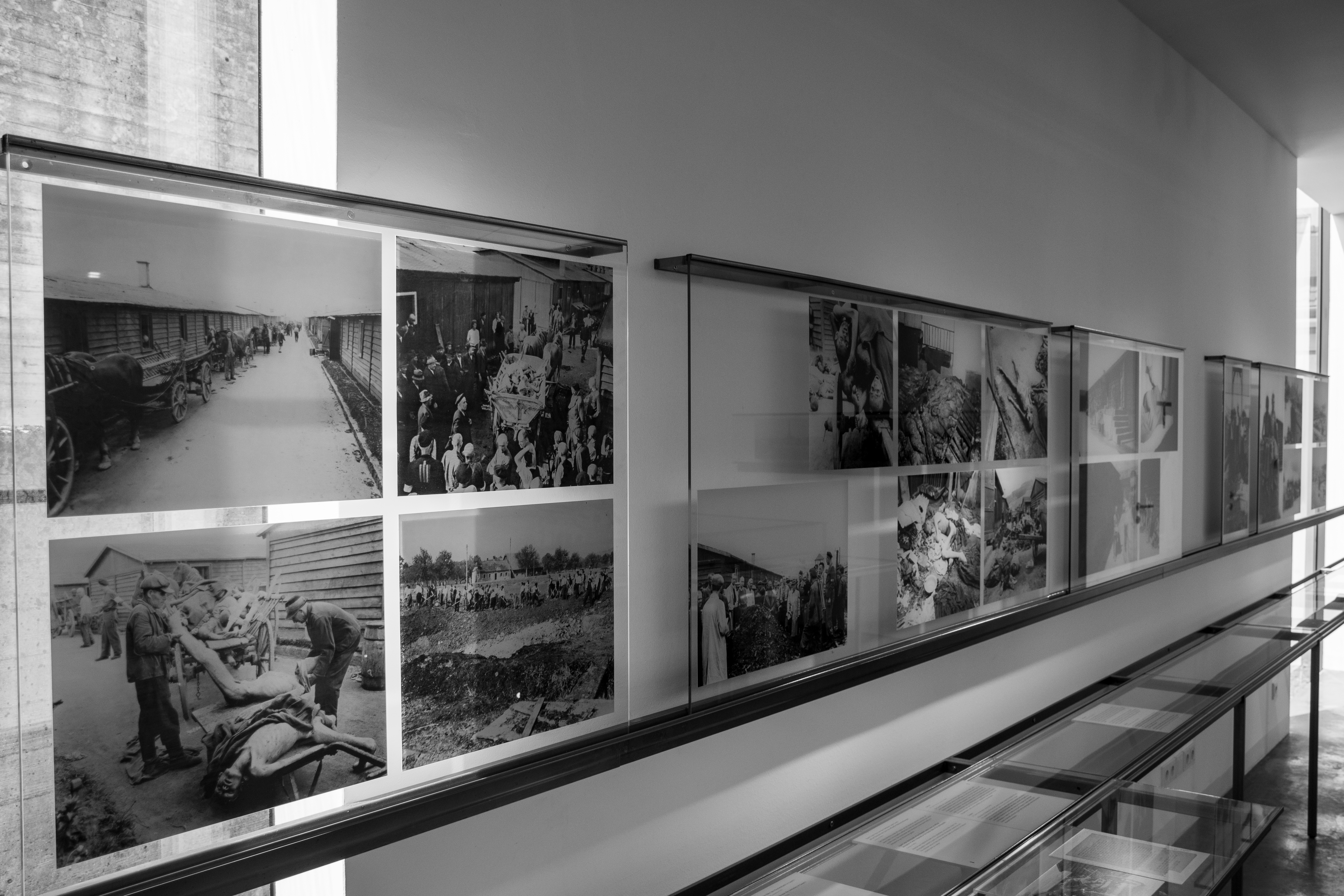
Photographs inside the Gusen memorial museum, showing the camp as American soldiers found it in May 1945. The images are from the liberators themselves. U.S. troops liberated nearly 40,000 people across the Mauthausen-Gusen complex in the days following May 5, 1945. Many were too far gone to survive even with immediate care. Some soldiers handed over their own rations on the spot. The prisoners died in front of them as bodies that had been starved for years could not process food. My grandfather was one of the first American doctors to reach the site. He never described what he actually saw there.
 13
13
Gusen Ceremony · Former Roll Call Grounds · May 9, 2026 · 5:00 PM
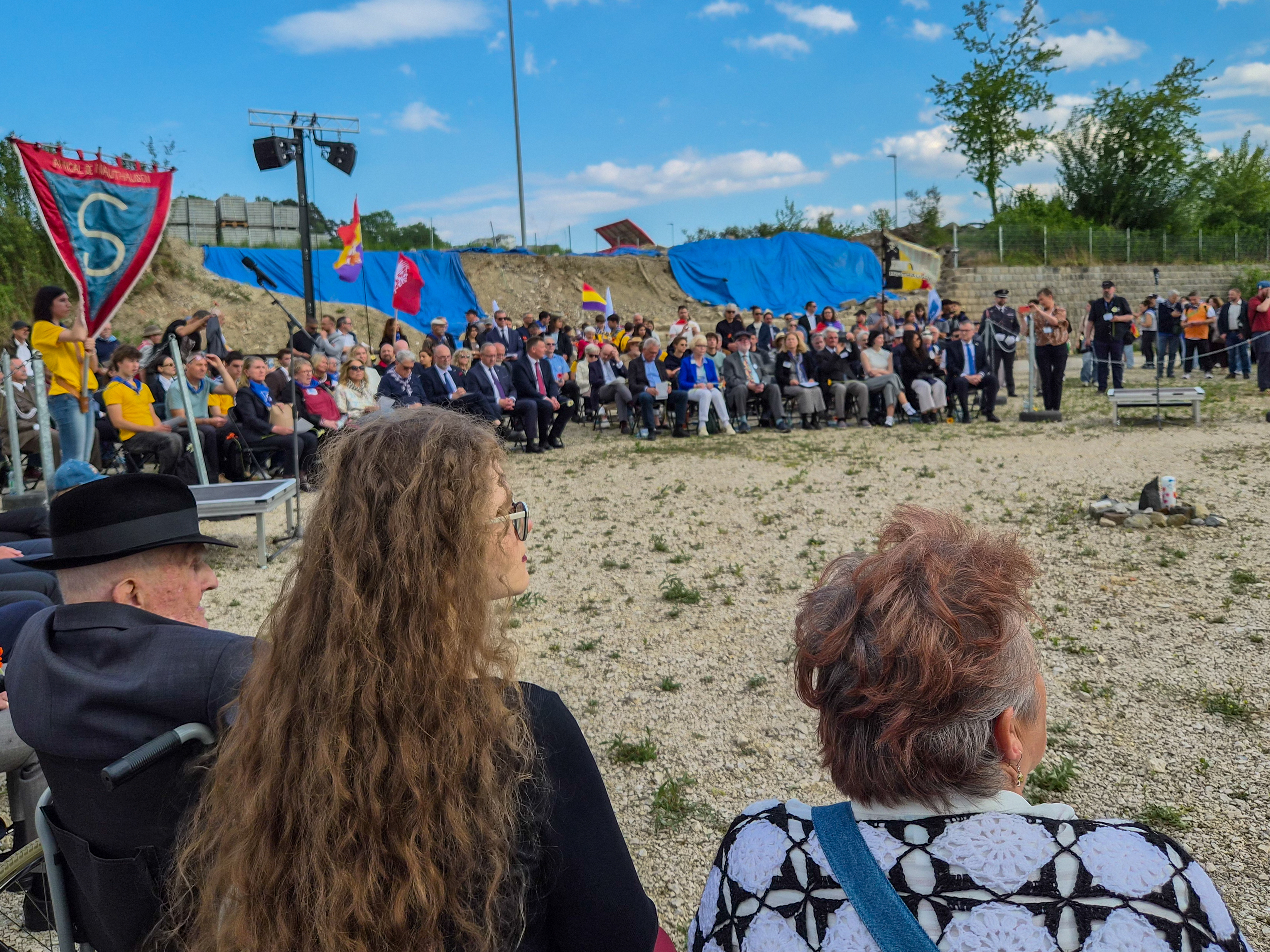
Around 1,000 people gathered on the former roll-call ground of the Gusen branch camp for the 81st liberation ceremony. Stanisław Zalewski, the last known surviving prisoner of the Gusen camp, is seated at left in the wheelchair. The gravel underfoot is the former roll call area or Appellplatz, where prisoners were made to stand at attention for roll call sometimes for hours, sometimes through the night, sometimes until they died of exposure. The ceremony opened with the reading of national and international remembrances and closed with the crowd singing together an adapted version of “Bella Ciao,” the Italian partisan anthem. The song opens with the line, “They stood together, for one another. ... They stood together, they would have never surrdendered to the Nazi beast.” The final line, then, was: “We stand together, for one another. ... The solemn oath of Mauthausen's inmates is on our lips, Long live freedom!”
Bella Ciao lyrics adapted by Marc Weydert & Luc Dockendorf
 14
14
KZ Gusen · May 9, 2026
Flowers and
Granite
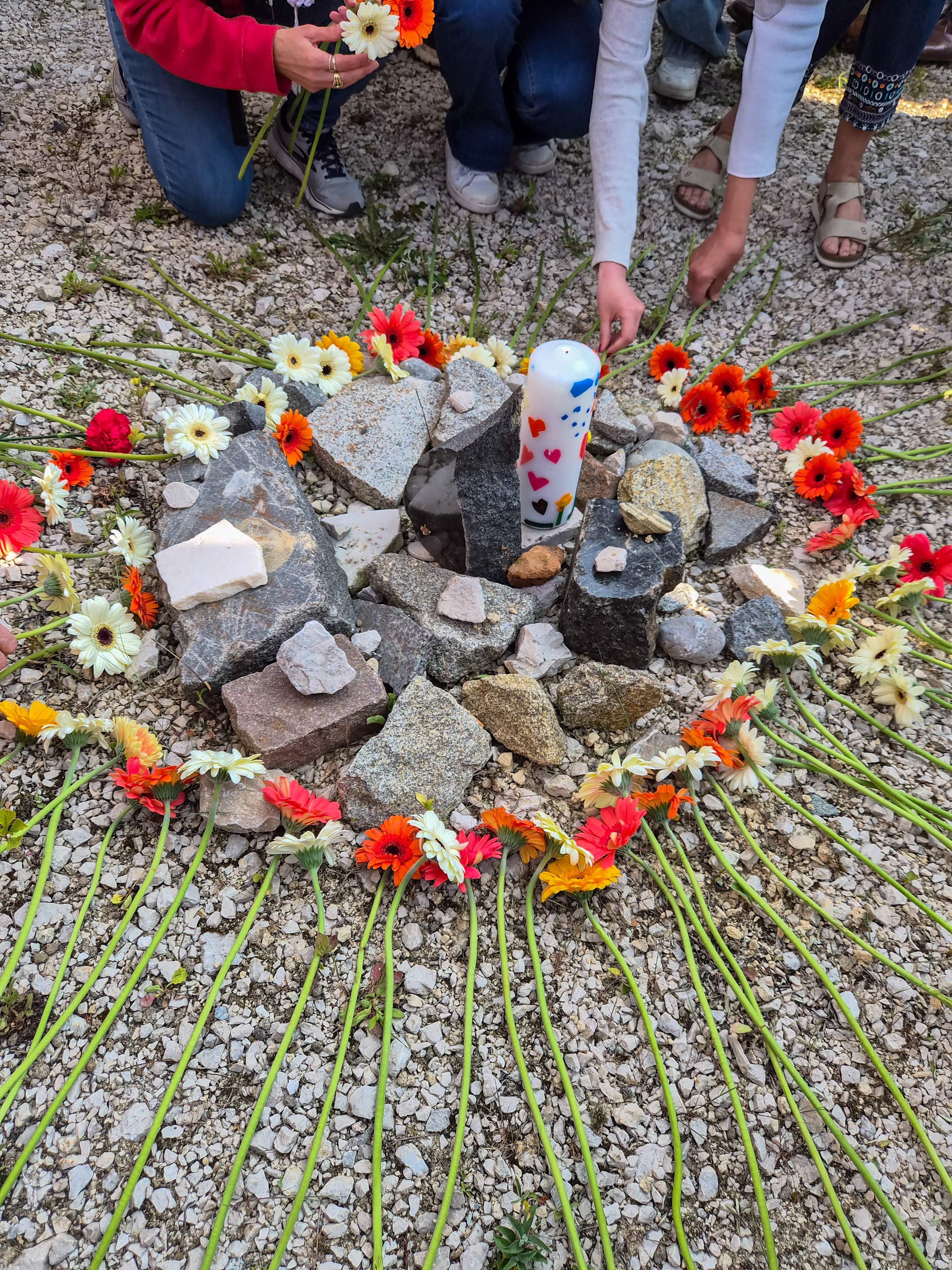
At the close of the ceremony, participants placed flowers around a candle made by local schoolchildren, encircled by pieces of granite from the quarry where prisoners were worked to death. The stones are from the same quarry. The same material that built the camp and crushed the people imprisoned here now holds the flowers. It was a quiet, human moment packed full of solemnity and, reverence, and rememberance.
 15
15
Gusen Crematorium · May 9, 2026 · Wreath Laying
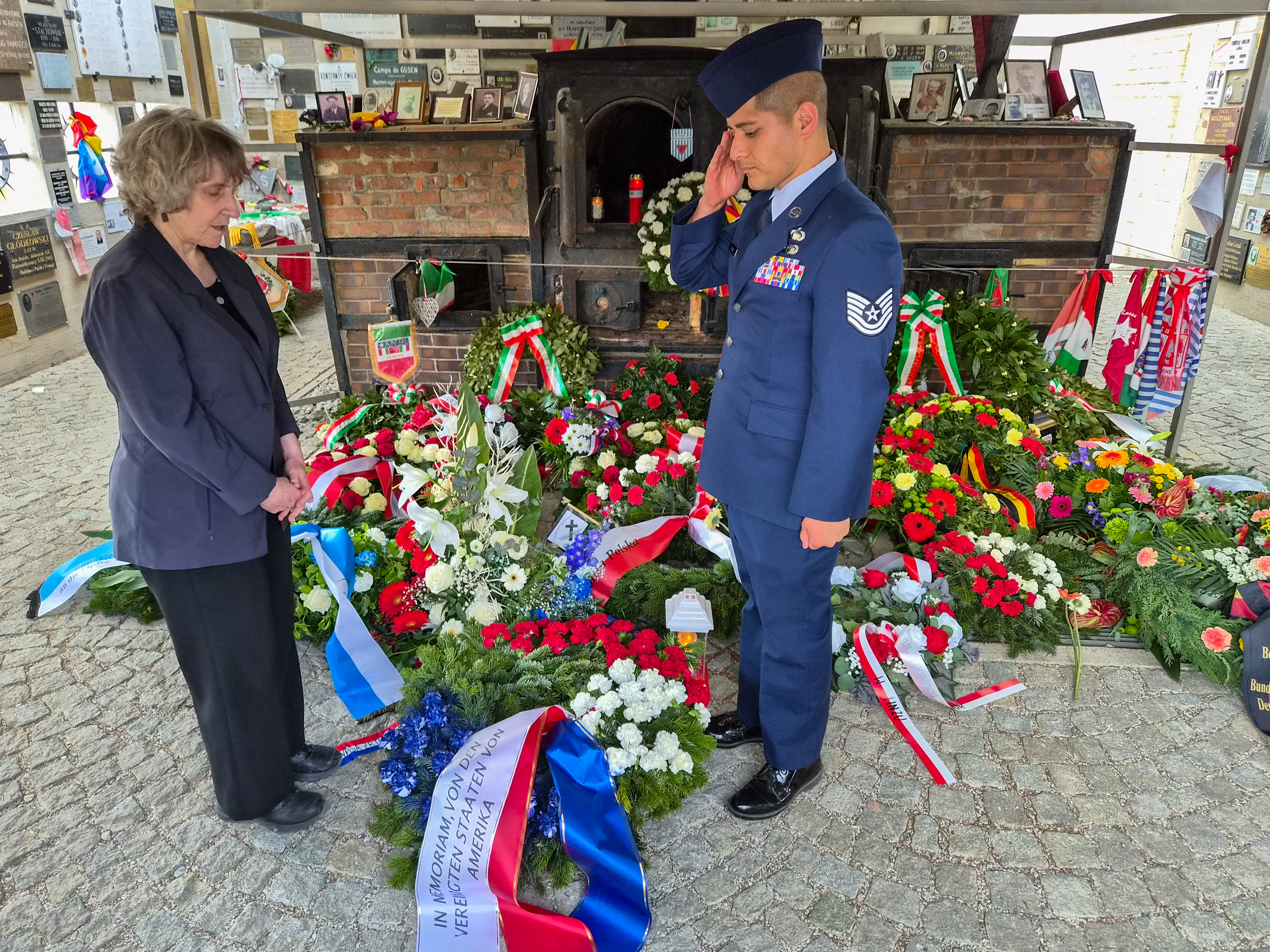
The United States wreath being laid inside the Gusen crematorium by Tech Sgt. Julio Rosa and U.S. Special Envoy for Holocaust Issues Ellen Germain. After the ceremony on the former roll-call ground, the crowd processed together at the Gusen Memorial to lay wreaths at the crematorium. There are no grave markers at Gusen. The crematorium serves as both mausoleum and memorial. This is where the Nazis cremated the bodies of the victims and destroyed physical evidence of torture before dumping the ashes in the Danube. The ceremony has been held annually for decades, kept alive by survivor groups and families long before any government got involved.
 16
16
The Last Survivor · May 9, 2026
Stanisław
Zalewski
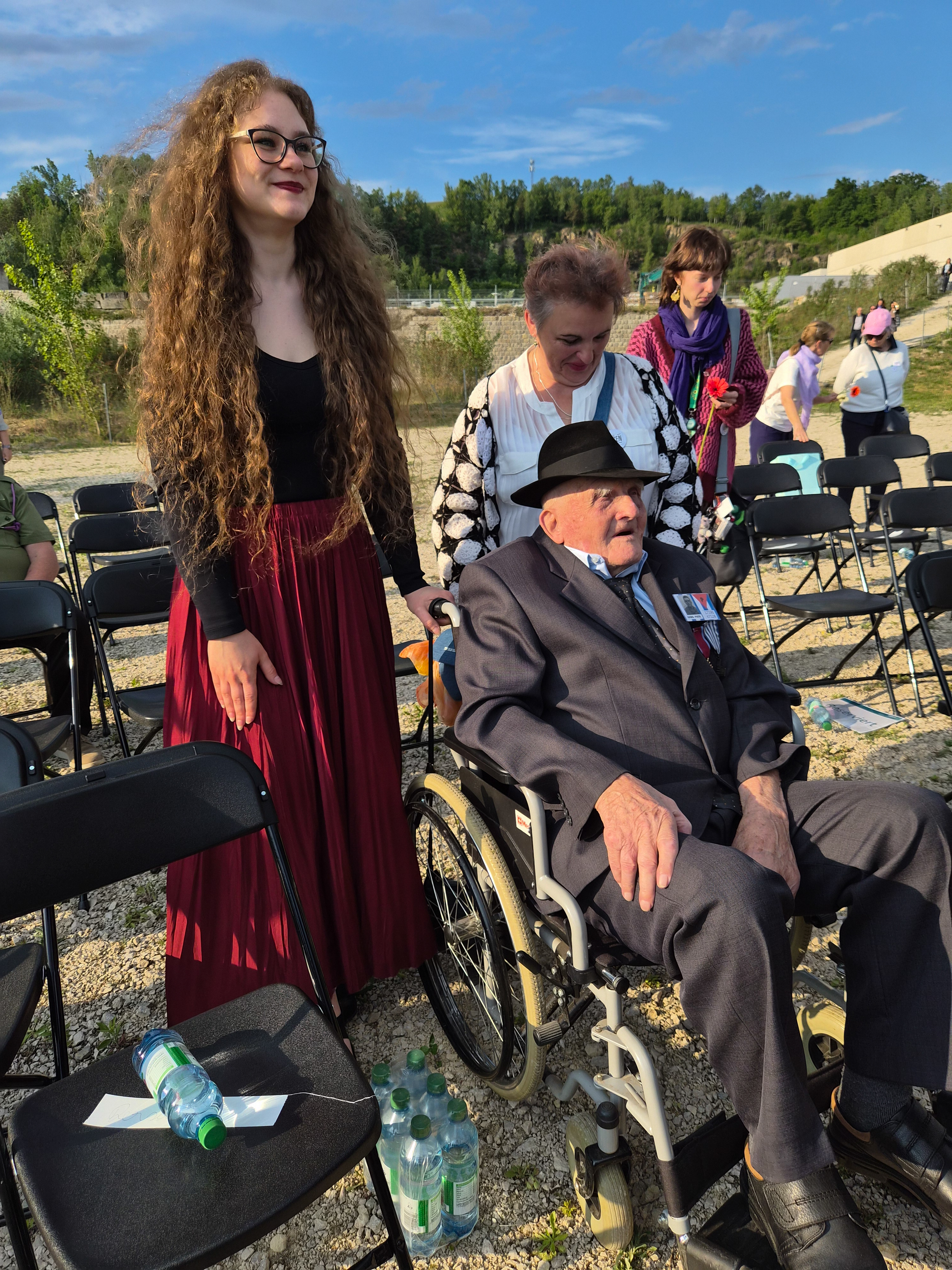
Stanisław Zalewski — the last known surviving prisoner of the Gusen camp, attended with his family. He was a young man when he was imprisoned here. He is 106 years old and in a wheelchair now. He survived Auschwitz, Mauthausen, and Gusen. There may be no living survivors at the 82nd ceremony. The chain from eyewitness to living memory is about to break. After that, we will only have photographs and writings and the future generations of people who choose to show up — who must show up — so that we #NeverForget.
 17
17
KZ Mauthausen · The 26th Infantry Memorial
Remembering
the Liberators
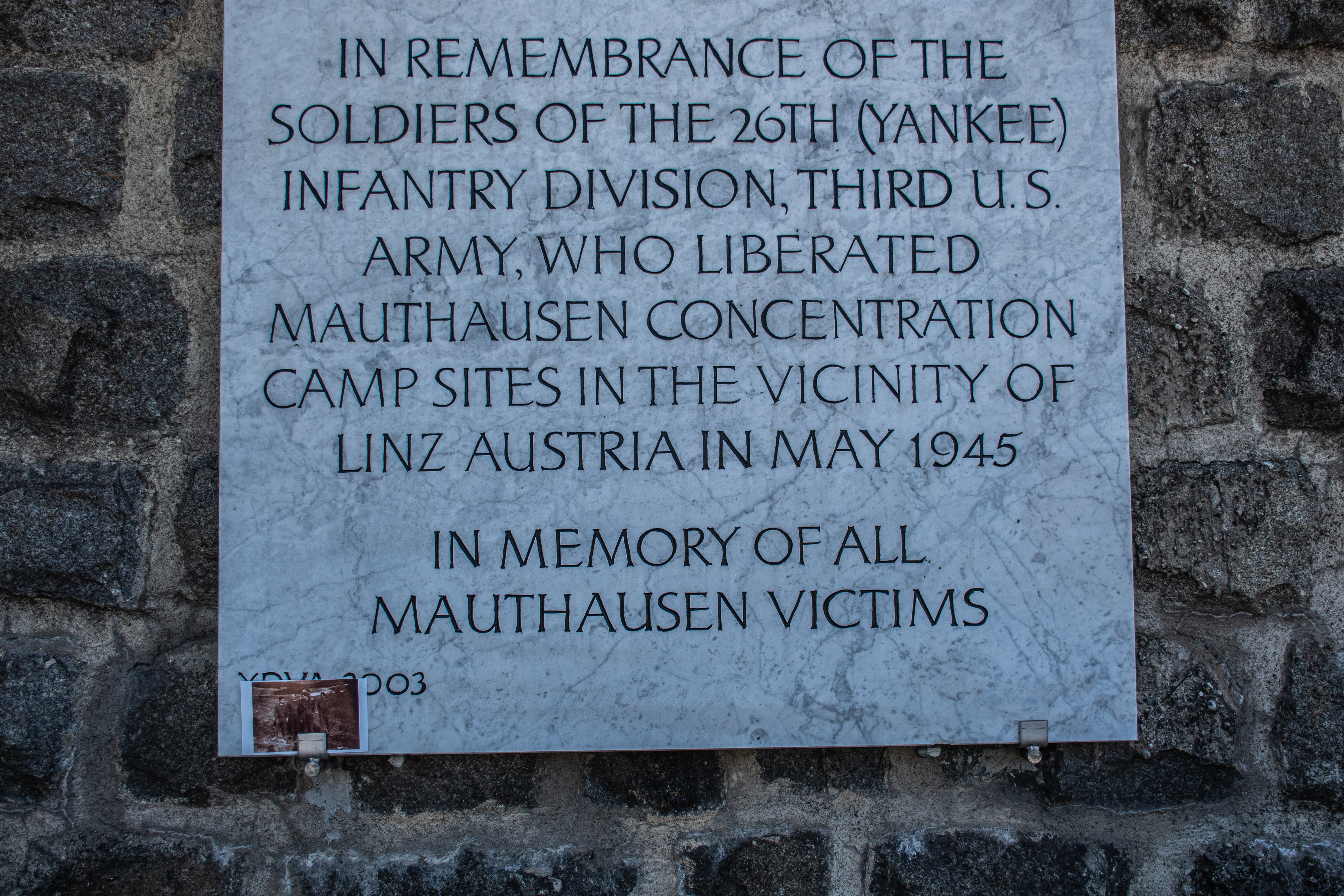
The U.S. liberator memorial at Mauthausen, with the inscription for the 26th Infantry Division (Yankee Division), my grandfather’s unit. I placed his V-E Day photograph at the base of the plaque. Captain Jack C. Blackstone, M.D. was 28 years old when he arrived here. He went on to deliver thousands of babies as an OB/GYN in Owensboro, Kentucky, for the next 40 years. He would speak briefly about landing in Normandy and the long marches. He spoke of the cold in the Ardennes and showed me a photo of, “us getting shelled”. He told me of taking a jeep on drive at Le Mans. He described meeting Russians in Czecholoslovakia (which I later found was an unauthorized border crossing). He told of a multitude of ways to procure liquor. Yet, beyond saying that he was the first doctor into Gusen and that they could smell the camp well before they saw it, he passed in 2005 having never described what he actually saw at Gusen or Mauthausen.
 18
18
KZ Mauthausen · Inside the Camp
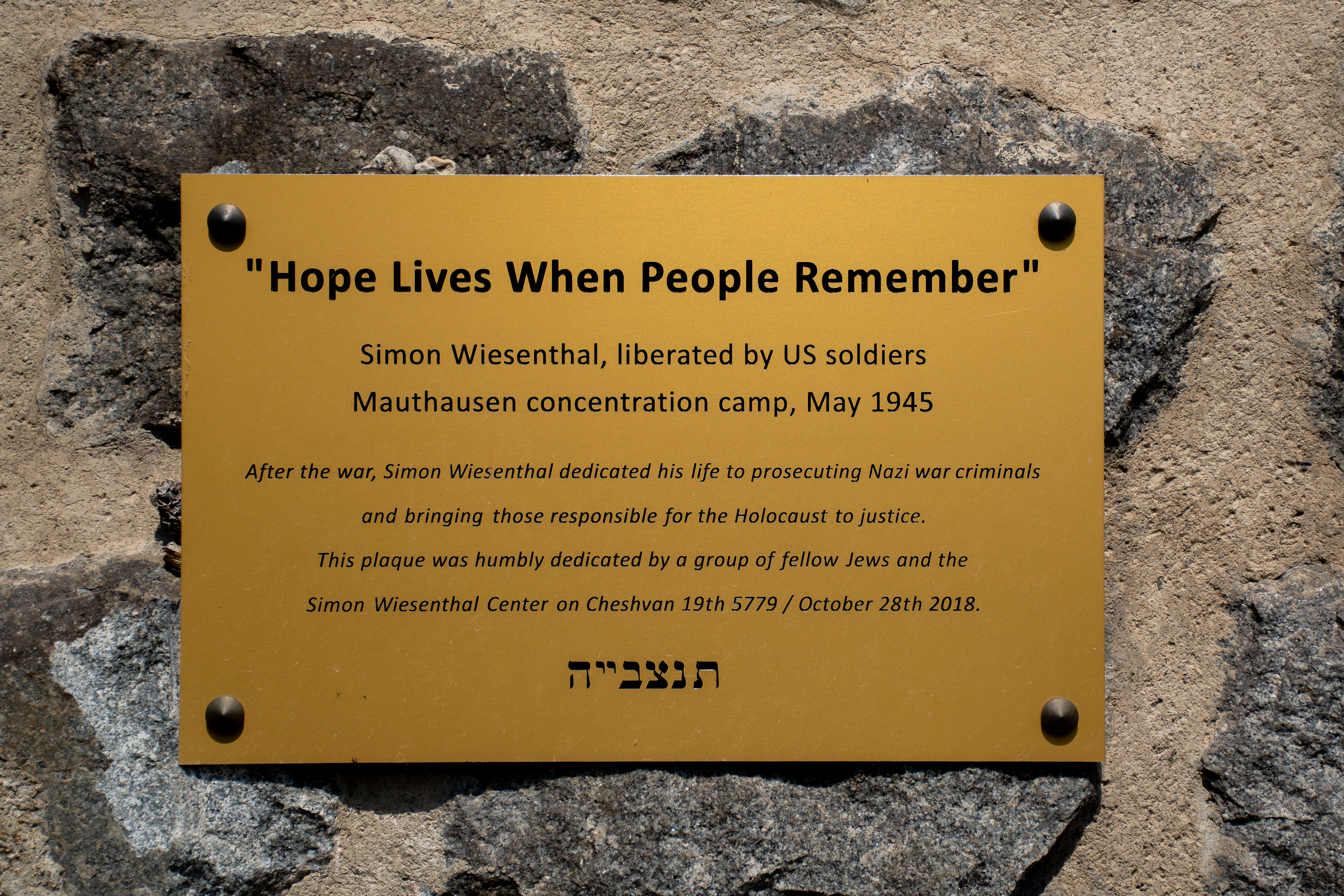
“Hope Lives
When People Remember”
A commemorative plaque inside Mauthausen. The phrase asks more of the living than it first appears to. It is not a comfort but rather an obligation. Memory is not passive. It requires showing up and speaking up.
 19
19
KZ Mauthausen · May 10, 2026
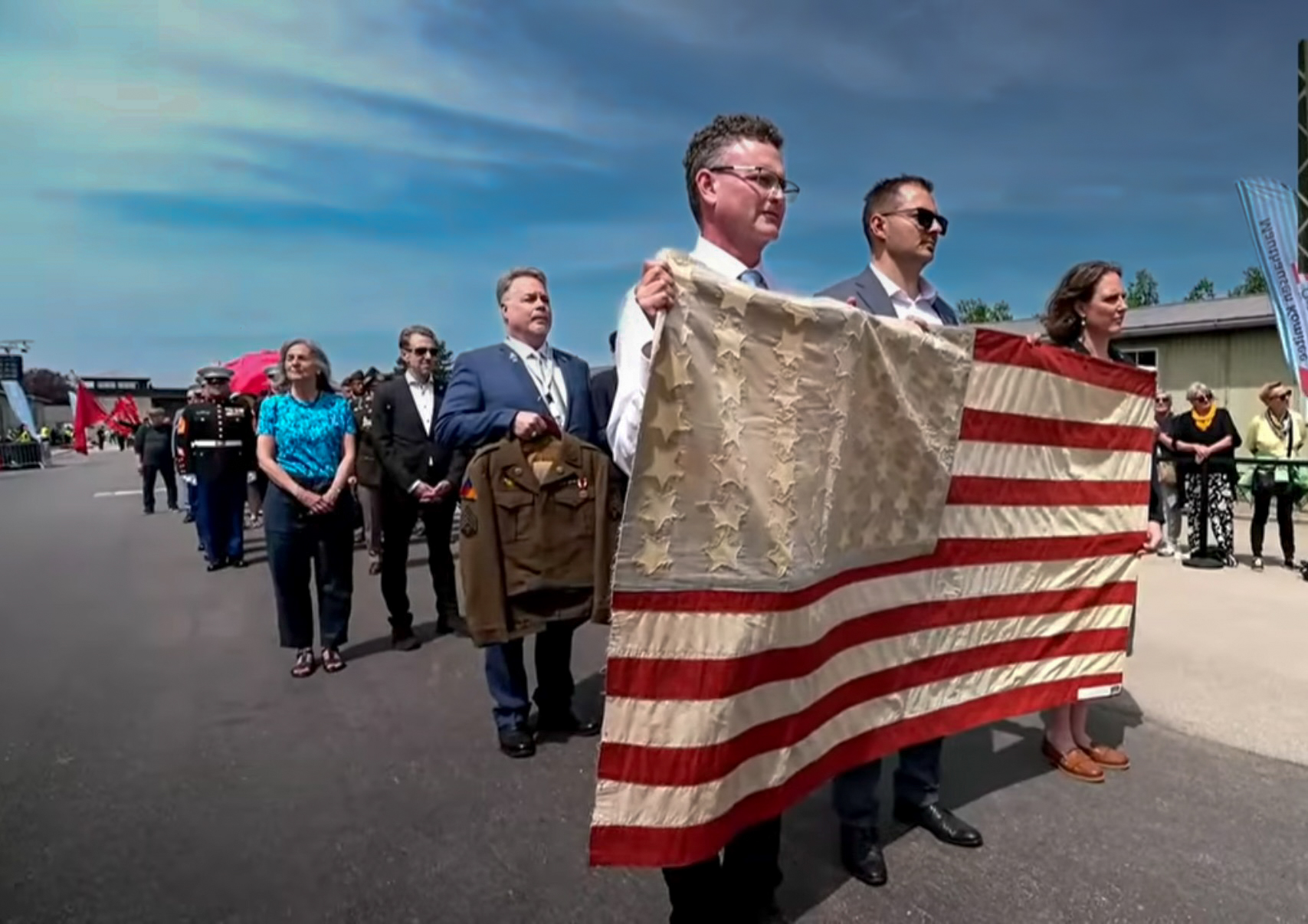
The Flag
with 56 Stars
In the final days before liberation, a group of Mauthausen prisoners secretly sewed an American flag. They had no model to work from and didn’t know exactly how many stars it should have so they sewed 56. I carried a replica of this flag as part of the U.S. delegation procession through the main gate on liberation day. The original flag is preserved at the Simon Wiesenthal Center Museum of Tolerance. The prisoners made it because they believed someone was coming. Someone was.
 20
20
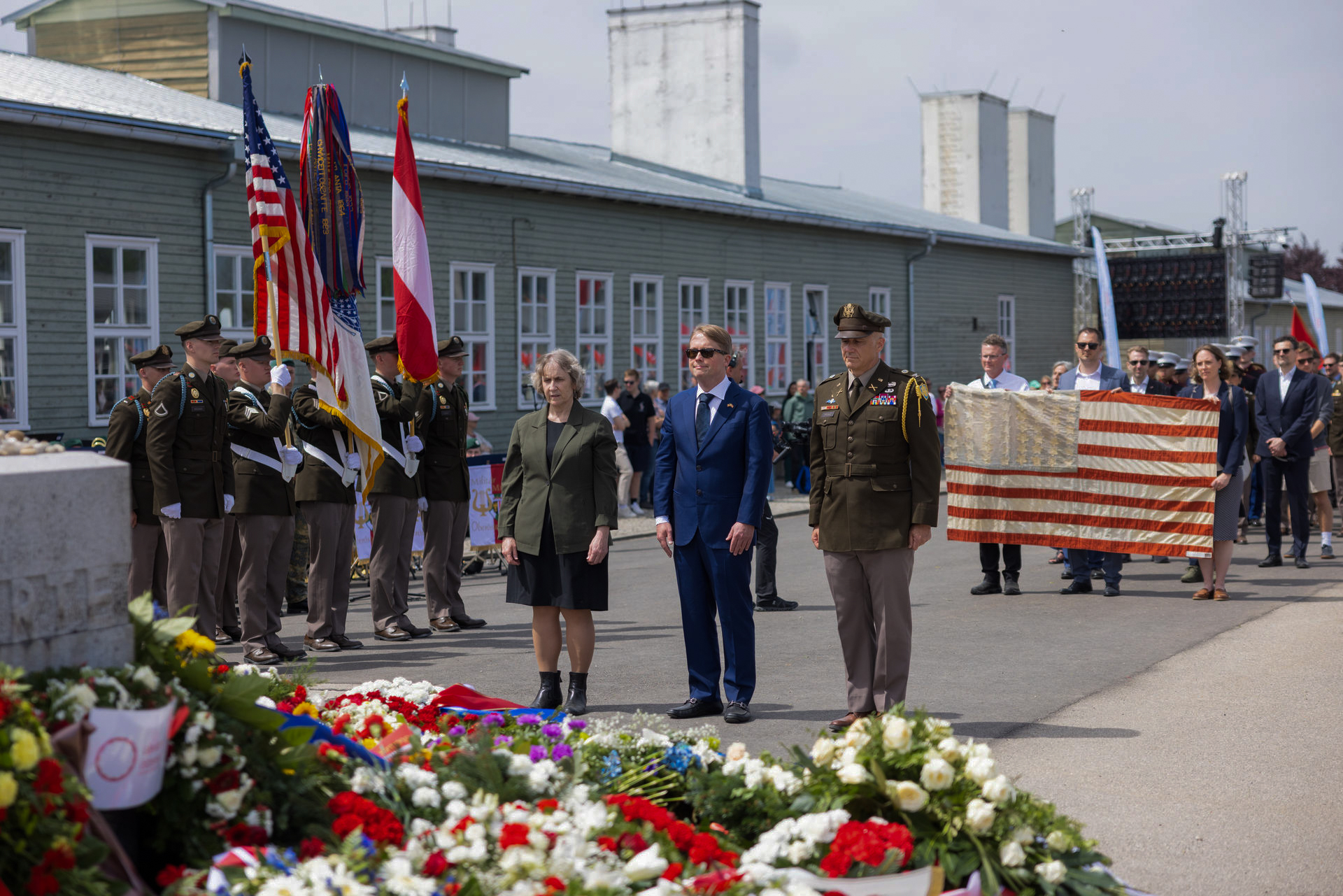
Mauthausen Liberation Ceremony · May 10, 2026 · 81st Anniversary
The U.S. delegation wreath laying at Mauthausen. Left to right: Col. Jonathan Drake (Defense Attaché, U.S. Embassy Vienna), U.S. Ambassador Arthur Fisher, and U.S. Special Envoy for Holocaust Issues Ellen Germain. I am visible in the background, carrying the prisoners’ flag. Ambassador Fisher later told the crowd: “It’s sometimes at the darkest point in life — and at night — that we see the light. It’s important that as a society we remember that light, so that darkness can never return.” As we progressed along the parade route, soldiers from the delegations of former victim nations saluted the American contingent. As our delegation entered the roll-call grounds, those that had been sitting in the crowd stood up and everyone started applauding. For a few short hours, I was reminded of how America once stood up to defy evil and protect the innocent. The emotional conflicts were real.
📷: Spc. Thomas Dixon, 7th Army Training Command>
 21
21
KZ Mauthausen · May 10, 2026
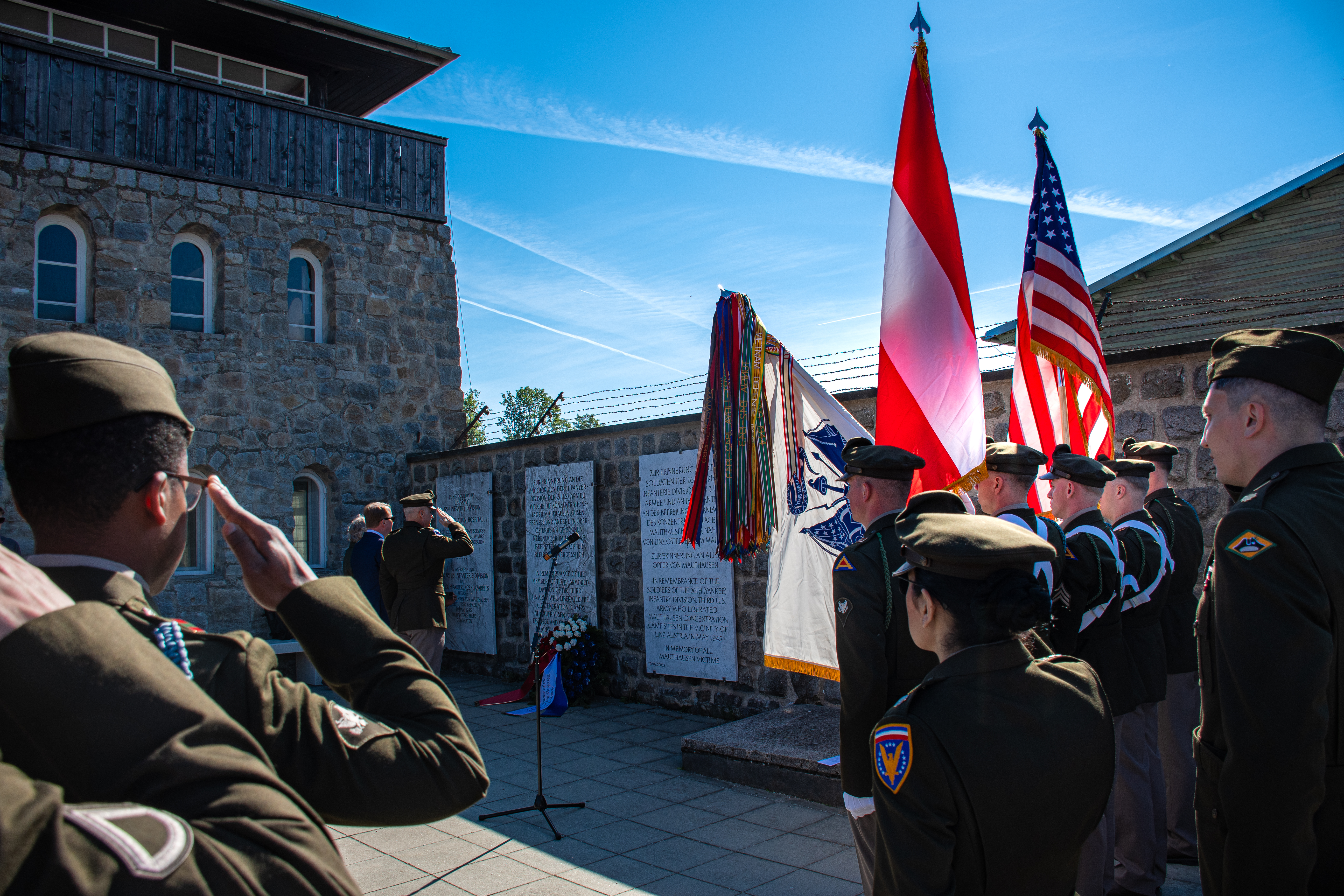
The Army
Remembers
Soldiers from the 7th Army Training Command’s Joint Multinational Readiness Center saluting at the U.S. memorial. For the third consecutive year, active-duty American soldiers attended as color and honor guards. The wreath ribbon read: “In Remembrance of the Liberators of the Oppressed.” In the words of Ms. Germain (Special Envoy for Holocaust Issues), “The horrors of Mauthausen remind us of the need for vigilance in combating antisemitism and protecting fundamental freedoms — because when we don’t, unthinkable terror ensues.”
 22
22
KZ Mauthausen · May 10, 2026
Legacy
Generations
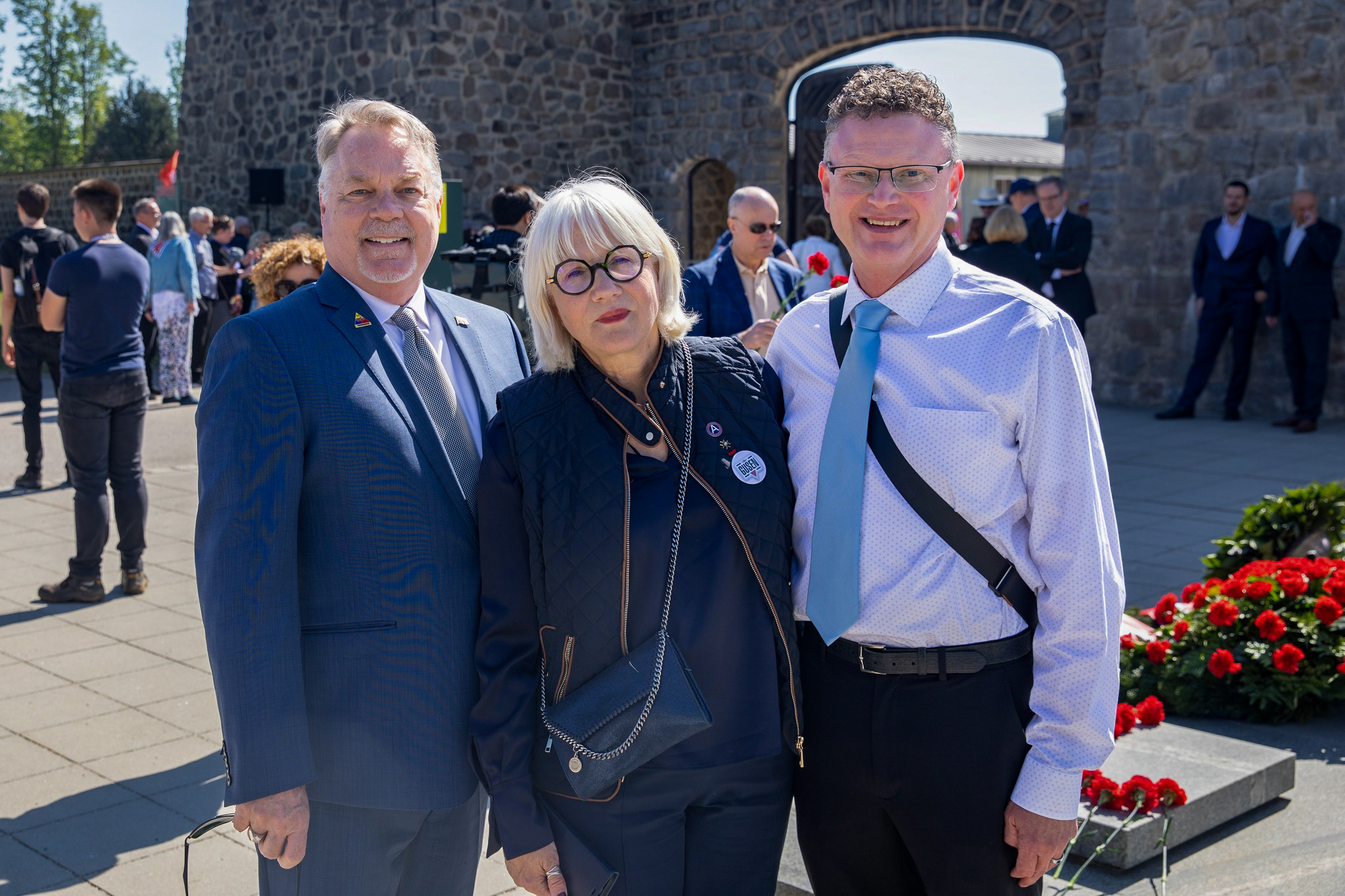
With Helen Patton, granddaughter of General George S. Patton, and Robert Esterley III (left), whose father was also a liberator. My grandfather’s 26th Infantry Division served under Patton’s Third Army. Helen walks in her grandfather’s name at these ceremonies. This photograph carries a particular weight as one of the very few things my grandfather would talk about was the fact he served with Gen. Patton — something he was particularly proud of for the rest of his life.
📷: Spc. Thomas Dixon, 7th Army Training Command
 23
23
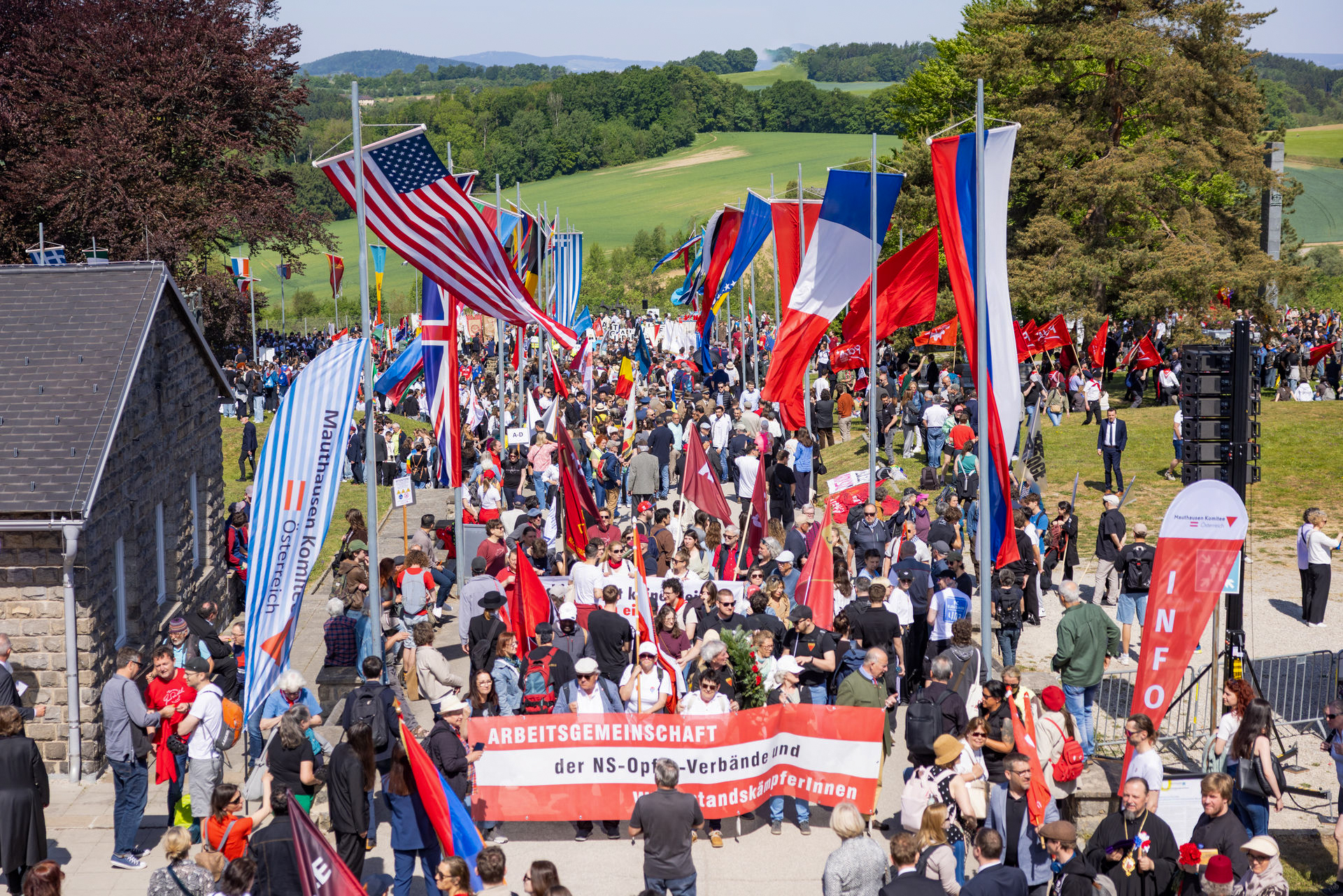
The international procession forming at the main roll-call grounds at Mauthausen. Delegations from dozens of nations and demographic groups carry their flags and banners. Each delegation represents a country or demographic group whose people were imprisoned or killed here. The ceremony opened with the reading of the Mauthausen Oath, taken by survivors at liberation in May 1945 and renewed at every commemoration since: a commitment to fight for a world where people live as free, equal, dignified human beings. The ceremony has grown rather than diminished in the years since the last survivors died. People keep showing up. That is the only answer there is.
📷: Mauthausen Memorial
 24
24
KZ Mauthausen · Inside the Walls
The Alps
from Inside
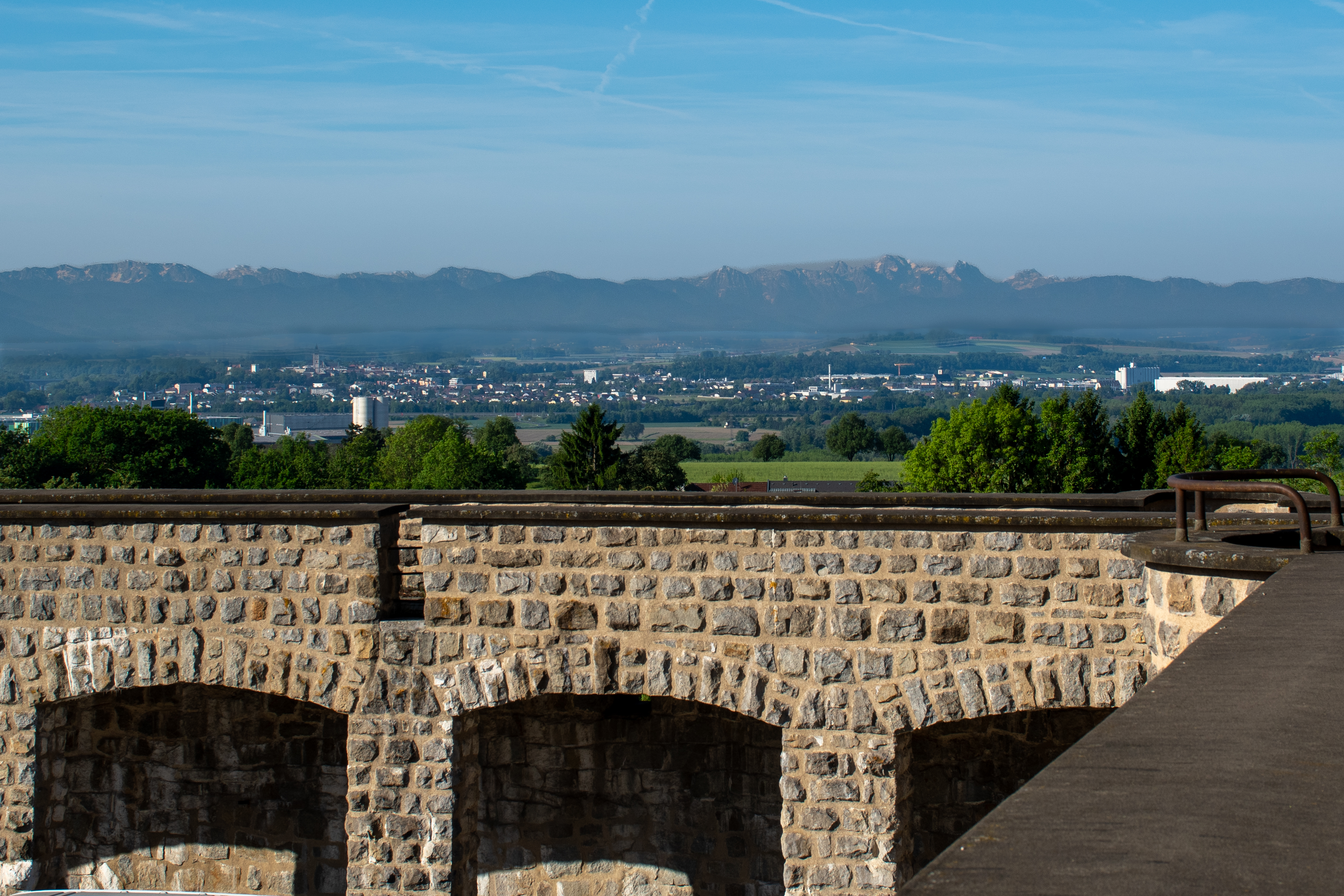
The Austrian Alps visible from inside the Mauthausen camp walls. This view existed for every prisoner who stood here. The mountains are indifferent and beautiful. The SS knew it too as officers held weddings at Mauthausen, posing for photographs with these same Alps in the background and celebrating life and love on the same hill where prisoners could see the mountains and nothing else. Beauty and atrocity occupied the same ground, at the same time, without apparent contradiction. That is perhaps the hardest thing to hold onto about this place. Such incredible beauty, yet such incredible horror.
 25
25
The U.S. Delegation · May 10, 2026
Those Who
Showed Up
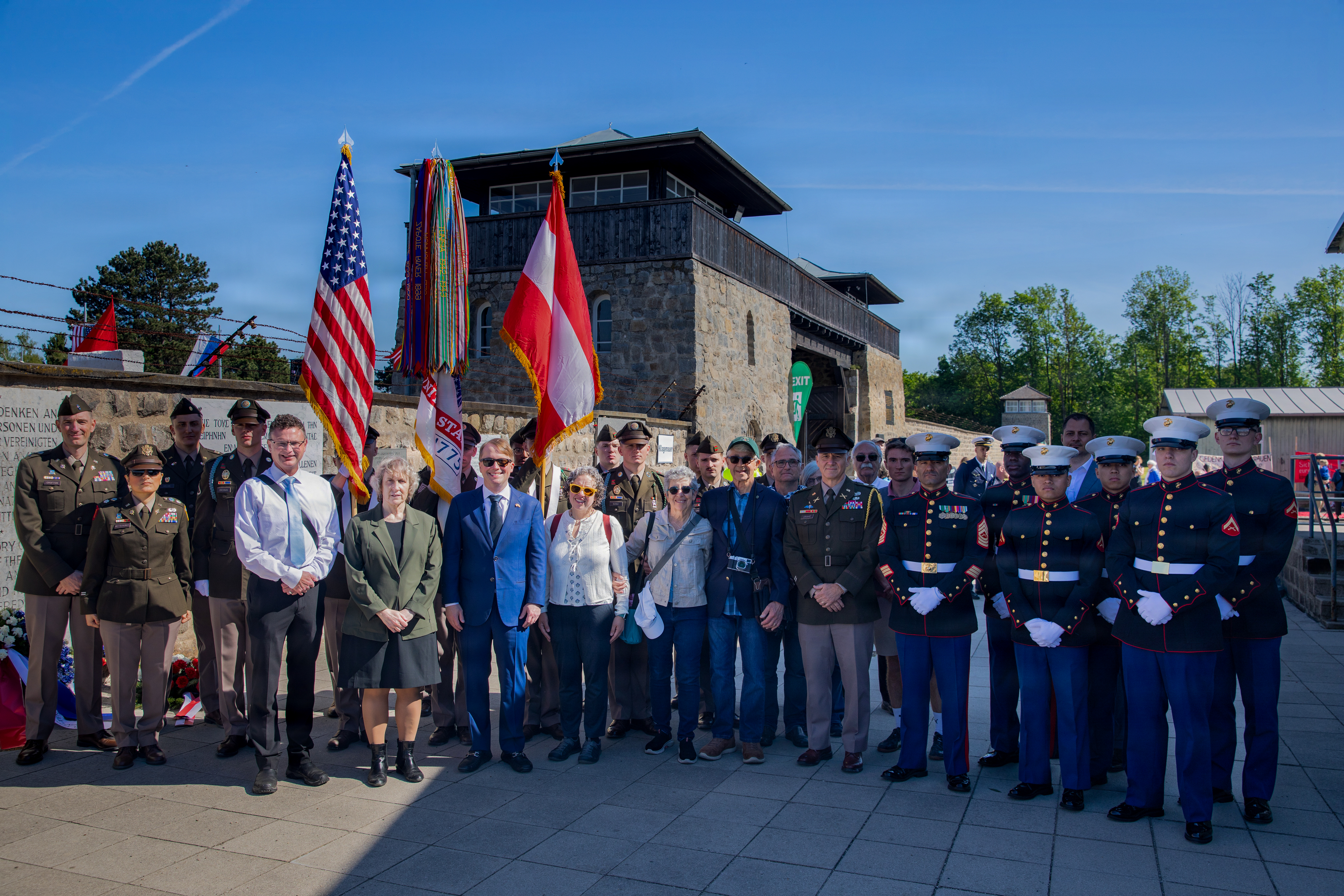
The United States delegation at the 81st Liberation Ceremony. Ambassador Arthur Fisher, Special Envoy Ellen Germain, Col. Jonathan Drake, soldiers from the 7th Army JMRC, the Embassy Marine Guard, family members and descendents of liberators and survivors who came to stand in for those who can no longer attend. My grandfather helped liberate this place and provide medical care to those whom he could save. I carried his memory here. Hopefully future generations of affected familes will continue to do so as well. It's the only way we can consistently remember so that we never let this happen again.
📷: Mauthausen Memorial